


 Posts
Posts


Legacy of Blood (1971)

A ride on the night train to Mondo Hell, stops at a modern Borgia's mess
This is the fourth installment of Cinematic Titanic and it's a real stinker. The guys do a great job of dwindling the pain level to a tolerable nuisance. So "ditch the dickey" and jump on it.
 The best scene in the movie, muted.
You know a movie will not go well when John Carradine narrates (a.k.a. reads the script & plot synopsis) over his character's funeral procession, a mere 5 minutes into the movie. The narration is his character's last will & testament. It stipulates that his estate be divided amongst his 4 children and servants. The children shall split $136 million equally, but if any should die then that share is split amongst the remainders. If all the children should die then it is divided amongst the servants. To be eligible, they must live in the family estate for a week. It sounds like the typical plot of a reality show.
There is little subtext as to the nature of the Deans. They are a powerful and severely dysfunctional family, but the real trouble starts with the drowning of that dog. From the opening voice-over by John Carradine you expect this movie will lead to a Machiavellian cat and mouse game with a twist ending.
 The director debuts fish-vision technology.
That journey is painfully slow and pointless. We trudge through minutes of watching people sitting around, playing pool, throwing darts, the misuse of the "through the fish bowl" shot, dramatic conversations between silk cravat wearing men, constant bickering, misplaced circus music, bizarre flashbacks reminiscent of faux-German expressionism, the horror aesthetic of the 4th grade and heaps of dramatic overacting. This all inevitably leads to the expected & ungratifying ending.
In the end, you will be happy to still be alive, but the pain might be too great to bear alone. This is probably the 2nd funniest of the series, behind the Oozing Skull, with some great lines such as: "We're like the white Jacksons" or "Check it out. I'm acting backwards." Share children, share.
 S&M night at John Carradine's house.
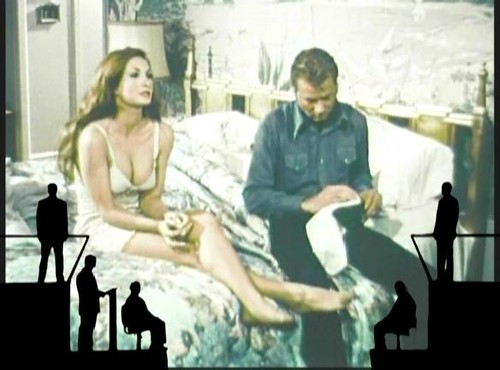 The best scene in the movie, muted.
You know a movie will not go well when John Carradine narrates (a.k.a. reads the script & plot synopsis) over his character's funeral procession, a mere 5 minutes into the movie. The narration is his character's last will & testament. It stipulates that his estate be divided amongst his 4 children and servants. The children shall split $136 million equally, but if any should die then that share is split amongst the remainders. If all the children should die then it is divided amongst the servants. To be eligible, they must live in the family estate for a week. It sounds like the typical plot of a reality show.
There is little subtext as to the nature of the Deans. They are a powerful and severely dysfunctional family, but the real trouble starts with the drowning of that dog. From the opening voice-over by John Carradine you expect this movie will lead to a Machiavellian cat and mouse game with a twist ending.
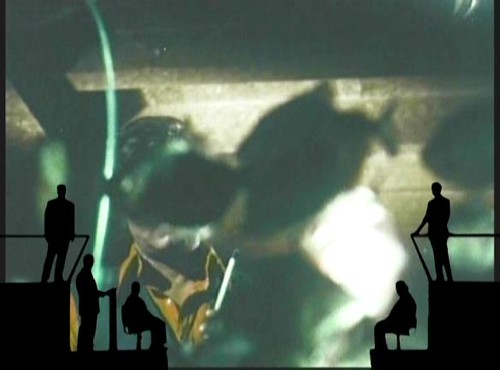 The director debuts fish-vision technology.
That journey is painfully slow and pointless. We trudge through minutes of watching people sitting around, playing pool, throwing darts, the misuse of the "through the fish bowl" shot, dramatic conversations between silk cravat wearing men, constant bickering, misplaced circus music, bizarre flashbacks reminiscent of faux-German expressionism, the horror aesthetic of the 4th grade and heaps of dramatic overacting. This all inevitably leads to the expected & ungratifying ending.
In the end, you will be happy to still be alive, but the pain might be too great to bear alone. This is probably the 2nd funniest of the series, behind the Oozing Skull, with some great lines such as: "We're like the white Jacksons" or "Check it out. I'm acting backwards." Share children, share.
 S&M night at John Carradine's house.


